
ASQN(Asian Software Quality Network)
Past Events
7th ASQN(Asia Software Quality Network) Conference
1. ASQN Conference in Tokyo, Japan

ASQN Conference was held in Tokyo, Japan on Tuesday, 10th September.
While the software quality has been focused in global, ASQN is a community in Asian countries to shares researches and case studies of software quality improvement, grows each other and present them to global. The activity is to hold annual conference sharing of experiences case studies. Several organizations about software quality in Asian countries are considering participation and have participated from China, Malaysia, Korea, Philippines, Thailand, Singapore, Vietnam, Indonesia and Japan.
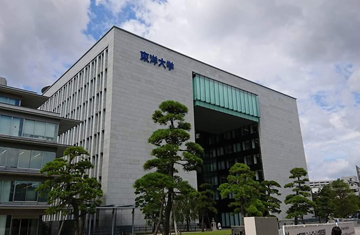
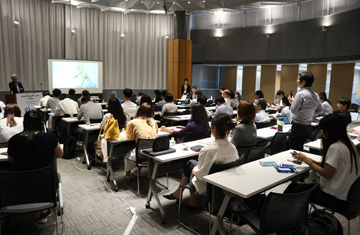
The venue was Hakusan Campus, Toyo University. ASQN was held conjunction with Software Quality Symposium 2019. Over 50 participants came from ASQN member- countries, China, Korea, Malaysia, Thailand and Japan.
2. ASQN Conference overview
This ASQN had four countries, China, Korea, Malaysia and Japan in order of the presentations. There were one presentation from China, two from Korea, two from Malysia and one from Japan. Table 1. shows the conference schedule that the presentations were organized from 13:00 until 17:00. Networking dinner was held after the conference at Toyo University.
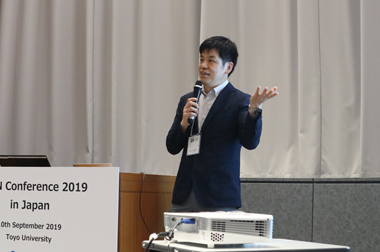
【Opening by Prof. Makoto Nonaka】
Prof. Nonaka introduced ASQN's objectives and past activities and mentioned the importance of software quality for the “2025 cliff” and frequent software failures as Japanese IT trends.
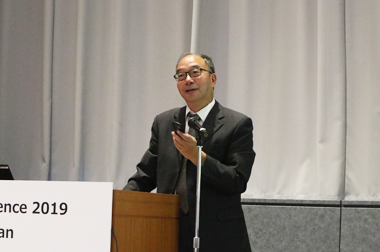
Prof. Yang from China presented with a novel style of “sequential interpretation” presentation that uses an interpreting device to translate his speech in Chinese into English voice. He listed the current status and challenges of the IT industry in China. For example, the software industry market in Shanghai has increased 118 times in these 18 years since 2000. Now there were 37,800 software companies in China in 2018, with a market size of 6.3 trillion yuan (about 900 billion USD). Due to this rapid expansion, there are mismatches between the supply and demand of human resources responsible for software development, and human resource development has become an issue. Their challenges to the future include ecosystem among building hardware such as CPUs, basic software such as operating systems, and applications that run on them.
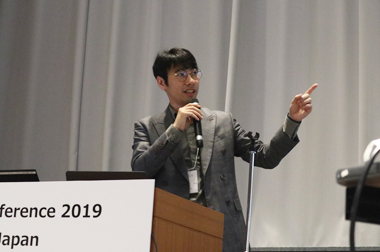
Mr. Chon from Korea presented test methods for Cyber-Physical-System (CPS) represented by autonomous driving assistance and drones. In testing for CPS, there are restrictions on the actual environment when the testing uses the actual Physical-System. Mr. Chon developed a method to test software without relying on real-world constraints. The method focuses on three aspects: diversity, efficiency, and safety. Then the method performs software testing in virtual environments.
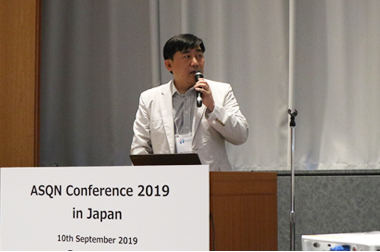
Mr. Kim from Korea also made a presentation related to CPS. Based on his project experiences, he discussed software quality in the Industry 4.0 era. First, he explained Industry 4.0 and the idea of CPS that includes automation levels and examples of optimized smart factories. In addition, he introduced the consideration of software quality for safety and diversity using examples of the maintenance support system for steelmaking processes and the simulation system for large-scale buildings from his own project experience.
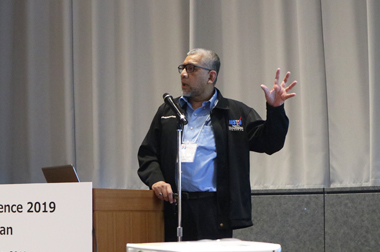
Mr. Amir from Malaysia introduced the works for independent verification and validation (IV & V) for software reliability. They have created an IV & V handbook and promote it to improve software quality. The IV & V handbook emphasizes evidence and reduces project risk by defining works in detail.
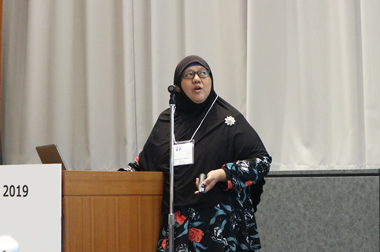
Ms. Halizawati from Malaysia gave a presentation about quality improvement using metrics for the software development process. Generally speaking, there are various metrics such as product metrics and process metrics. Therefore, the selecting metrics is necessary for use in actual projects. Ms. Halizawati's organization is working to continuously select metrics items and share the results as Process Capability Baseline (PCB).
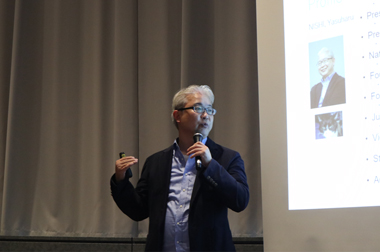
At the end of the presentation, Prof. Nishi, the University of Electro-Communications, Japan presented about AI product quality assurance guidelines. The guideline was created by the AI Product Quality Assurance Consortium (QA4AI Consortium). For example, AI may produce wrong outputs, so we should consider how to allow it and/or how to make it not be wrong. The current study results have been summarized in four specific areas: content generation system, smart speaker, industrial process, and autonomous driving.
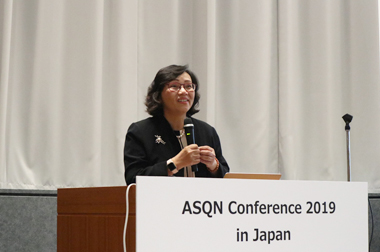
【Suwipa Wanasathop, Thailand】
At the closing session, Ms. Suwipa from Thailand, who participated for the first time, commented for ASQN conference and that the next ASQN is scheduled to be held in Thailand.
3. Next ASQN conference
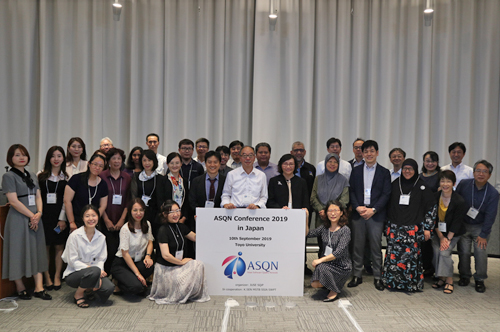
【ASQN members】
ASQN2019 Program
| Date | Time | Contents |
|---|---|---|
| Day1 Monday 9th Sep,2019 |
p.m. |
(invited only) Business tours:KOMATSU IoT Center Tokyo |
| Day2 Tuesday 10th Sep,2019 |
11:00-12:30 | (invited only) ASQN board meeting and lunch at Toyo University. |
| 13:00-13:15 |
OpeningMakoto Nonaka,Toyo University,Japan Download Download
|
|
| 13:15-13:45 |
The Trend of China's Software Industry DevelopmentEast China University of Science and Technology, China |
|
| 13:45-14:15 |
Suggestion of Testing Method for Industrial Level Cyber-Physical SystemThinkforBL , Korea |
|
| 14:30-15:00 |
Consideration for SW quality Factor in the era of industry 4.0Apexsoft , Korea |
|
| 15:00-15:30 |
Quantifying Confidence Using Metrics – an IV&V PerspectiveMalaysian Software Testing Board , Malaysia |
|
| 15:30-16:00 |
Software Process MetricsCustommedia Sdn Bhd, Malaysia |
|
| 16:00-16:15 | Break | |
| 16:15-16:45 |
Guidelines of Quality Assurance for Artificial-Intelligence-based products and services(QA4AI)The university of Electro-Communications, Japan |
|
| 16:45-17:00 |
ClosingMakoto Nonaka,Toyo University,Japan |
|
| 17:10-18:15 | Networking talks with drinks and snacks | |
| Day3 Wednesday 11th Sep,2019 |
p.m. | (optional) SQiP Symposium※ Tutorial (in Japanese) |
| Day4 Thursday 12th Sep,2019 |
a.m. | (optional) SQiP Symposium※ Keynote Speech (in Japanese) |
* ASQN 2019 is conjunction with SQiP symposium. The past SQiP symposiums are the following link: http://www.juse.jp/sqip/symposium/

What is ASQN?
Purpose

There is no space to argue about the importance of software in the current society as part of social and industrial infrastructure. We can find software installed in the variety of products, systems, and programs and it is the software that determines not only their features but also the values of them.
Software does make a difference in the industrial competitiveness and contributes to strengthen national economic power.
There is no border in the software industry. Software development is being off-shored and is performed by project teams with multinational countries.
It is essential that we as an Asian community cooperate to pursue software quality excellence and achieve our higher competitiveness in the world. For that purpose, we propose herewith the establishment of Asian Software Quality Network.
Objectives
- Share our knowledge and experiences on software quality empirical methods/techniques and organization-wide practices that have been successfully applied in software business.
- Provide opportunities for dedicated software organizations, practitioners and researchers to appeal their excellent outcomes, capability and competencies on software quality.
- Show the Asian voice and increase the awareness of Asia in the world.
Member list
- China:SSIA(Shanghai Software Industry Association)
- Japan:JUSE/SQiP(Software Quality Profession)
- Korea:K.SEN(Korea Software Engineering Network)
- Malaysia:MSTB(Malaysian Software Testing Board)
- Thailand: SWPT(Software Park Thailand)
- Philippines:PSIA(Philippine Software Industry Association)
Contact
Union of Japanese Scientists and Engineers, JUSE
E-mail: sqip@juse.or.jp
Phone: 81-3-5378-9813/Fax: 81-3-5378-9842